1. 2주의 공백1. Two Weeks of Silence
지난 4월 2일, 자강헌은 국회 의원회관에서 대한민국의 AI 생태계가 단일 동맹국에 지나치게 의존하고 있다고 경고했다. 영국의 독립적 핵 억지력이 실상은 미국 트라이던트 미사일에 의존하는 것과 같다고, 우리의 AI 주권도 착시라고.
On April 2, at the National Assembly Members' Office Building, Jagangheon warned that Korea's AI ecosystem depends excessively on a single allied country — that our AI sovereignty, like Britain's nuclear deterrent that actually runs on leased American Trident missiles, is an illusion.
그로부터 2주가 지난 4월 중순, 두 편의 기사가 거의 동시에 나왔다. 하나는 영국 Economist의 커버스토리, 하나는 홍콩 South China Morning Post의 테크 인터뷰. 지정학적으로 반대편에 선 두 매체가, 각자의 논리로, 자강헌이 4월 2일에 꺼낸 질문에 답하고 있었다.
Two weeks later, in mid-April, two articles appeared almost simultaneously — a cover story in the British Economist and a tech interview in Hong Kong's South China Morning Post. Two outlets on opposite geopolitical sides, each answering, in its own language, the question Jagangheon raised on April 2.
Economist는 말했다 — 이 다섯 명이 서구 문명의 운명을 손에 쥐고 있다고. SCMP는 말했다 — 최신 모델을 쫓는 것이 정답은 아니라고.
The Economist said five men now hold the fate of Western civilisation. SCMP said chasing the frontier is not the answer.
경고는 이미 늦었고, 방법은 아직 남아 있다. 이 글은 그 사이의 공간에 관한 것이다.
The warning arrived late. The method is still open. This essay is about the space in between.
2. Economist의 고백 — AI의 포드들2. The Economist's Confession — The Fords of AI
Economist 4월 16일자 커버스토리는 의도적으로 과장된 제목을 달았다. "AI의 리더들이 포드나 록펠러만큼 강력해질 수 있을까?" 대답은 "아직은 아니다"였지만, 본문의 무게중심은 다른 곳에 있었다.
The Economist's April 16 cover story carried a deliberately inflated title: Could AI's leading men become as powerful as Ford or Rockefeller? The answer was "not yet," but the weight of the piece sat elsewhere.
샘 올트먼(OpenAI), 다리오 아모데이(Anthropic), 데미스 허사비스(Google DeepMind), 일론 머스크(xAI), 마크 저커버그(Meta) — 다섯 이름을 나열한 뒤 Economist는 한 문장을 얹었다.
After naming Sam Altman, Dario Amodei, Demis Hassabis, Elon Musk, and Mark Zuckerberg, the Economist added a single sentence.
"이 다섯 명이 서구 문명의 운명을 손에 쥐고 있다."
These five men hold the fate of Western civilisation in their hands.
— The Economist, 2026년 4월 16일 — The Economist, April 16, 2026
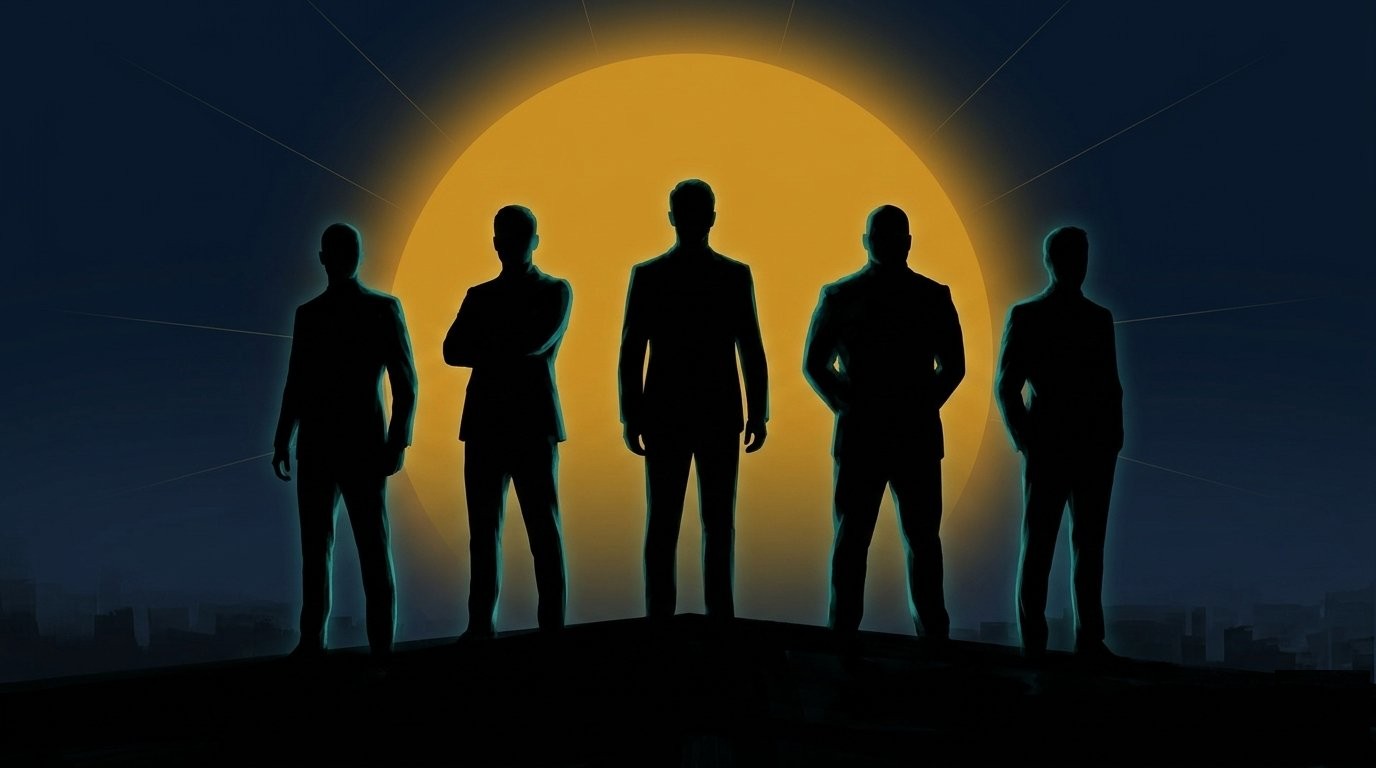
친자본, 친시장, 대체로 친미 주류 매체가 스스로 쓴 문장이다. 반미도 좌파도 아닌 자리에서 나온 진단이다. Economist는 150년의 미국 산업사에서 11개의 기술 물결을 뽑아 각 시대 대표 거물 5명씩을 골라 비교했다. 철도의 밴더빌트, 철강의 카네기, 석유의 록펠러, 자동차의 포드, 은행의 J.P. 모건. 매출·고용·시장가치·경영지배력·개인 재산을 GDP 대비로 표준화해 순위를 매겼다.
That sentence was written by a pro-capital, pro-market, generally pro-American mainstream outlet — a diagnosis from neither the anti-American left nor the dissident fringe. The Economist drew eleven technological waves from 150 years of American industrial history, picked the top five magnates from each era, and ranked them by revenue, employment, market capitalisation, corporate control, and personal wealth — all standardised against GDP.
현재의 AI 5인은 그 랭킹에서 하위권이다. 회사가 아직 작고, 이윤은 거의 없으며, 경영지배력도 약하다. 올트먼은 이사회가 하룻밤 사이에 해임할 수 있다. 아모데이는 자신이 공동 창업한 랩의 소수 지분만 보유한다. 허사비스는 구글의 한 사업부장일 뿐이다.
Today's AI Five rank near the bottom of that list. Their companies are still small, profits negligible, corporate control weak. Altman can be ousted by his board overnight. Amodei holds only a minority stake in the lab he co-founded. Hassabis is not even the most senior employee at his parent company.
그런데도 Economist는 이 다섯 명을 문명의 운명과 연결했다. 왜인가.
And yet the Economist tied these five to the fate of civilisation. Why?
기사는 세 가지 공통점을 짚는다. 거물은 거의 예외 없이 별나다 — 포드의 반유대주의, 록펠러의 강박증, J.P. 모건의 점성술 상담. 지금의 머스크 음모론이나 저커버그의 기계 같은 태도는 특별히 새롭지 않다. 신기술은 언제나 새로운 위험을 데려왔다 — 철도 공황, 자동차 사상사고, 에디슨-웨스팅하우스의 공개 감전 쇼. 그리고 결국 국가가 개입했다 — 1911년 Standard Oil 해체, 1913년 연준 창설, 2000년 Microsoft 분할 명령.
The piece lists three patterns. The tycoons are almost uniformly strange — Ford's antisemitism, Rockefeller's compulsions, J.P. Morgan's astrology sessions; Musk's conspiracies and Zuckerberg's robotic affect are nothing new. New technologies always brought new dangers — railway panics, automobile fatalities, the Edison-Westinghouse public electrocutions. And, eventually, the state intervened — the 1911 Standard Oil breakup, the 1913 creation of the Federal Reserve, the 2000 Microsoft split.
세 번째 공통점에서 자강헌이 멈춰 서야 한다. 미국은 자국 거물에 대해 국가 권력으로 개입할 수 있었다. 루스벨트의 반독점법, 뉴딜의 금융개혁, 클린턴 시기의 Microsoft 분할 소송. 미국의 소비자는 미국의 법으로 보호받았다.
The third pattern is where Jagangheon must pause. The United States could discipline its own tycoons with state power. Roosevelt's antitrust laws, the New Deal's financial reforms, Clinton-era antitrust against Microsoft. The American consumer was protected by American law.
한국의 AI 소비자는 어느 법으로 보호받는가. OpenAI는 한국 법원의 관할이 아니다. Anthropic도, Google도, Meta도, xAI도 마찬가지다. Economist가 예상하는 "국가의 개입 국면"이 온다 해도, 그 국가는 미국이지 한국이 아니다.
Which law protects the Korean AI consumer? OpenAI does not fall under Korean court jurisdiction. Neither do Anthropic, Google, Meta, or xAI. If the phase of state intervention that the Economist anticipates does arrive, the state in question will be American — not Korean.
트라이던트 비유를 한 번 더 꺼내자. 영국은 미사일을 임대받는다. 총리에게 발사 권한은 있지만, 미사일 자체의 소유권은 미국에 있다. 미국이 계약을 끊으면 영국의 핵 억지력은 하룻밤 사이에 증발한다. AI는 그보다 미묘하다. 중단 통보조차 필요 없다. API 가격 인상, 사용 정책 변경, 특정 국가 제한 — 약관 한 줄의 수정만으로 충분하다.
Consider the Trident analogy once more. The UK leases its missiles. The Prime Minister holds launch authority, but ownership rests in Washington. If the U.S. cancels the contract, Britain's deterrent evaporates overnight. AI is subtler. No cancellation notice is required. An API price increase, a usage policy update, a country-level restriction — one edited line in the terms of service is enough.
Economist는 이 구조를 "서구 문명 내부의 문제"로 틀짓는다. 서구 바깥의 국가들도 이 5인의 회사에 똑같이 의존하고 있다는 사실은, 기사 안에서 조용히 전제된다.
The Economist frames the structure as an internal Western problem. That states outside the West depend equally on these five companies is quietly assumed throughout the piece — never stated, never questioned.
3. 같은 질문의 함정 — "우리도 SOTA"3. The Familiar Trap — "Let's Build Our Own SOTA"
이런 경고를 듣고 한국에서 가장 흔히 나오는 반응은 하나다.
Faced with such warnings, Korea's reflex is usually one line.
"그럼 우리도 SOTA(State-of-the-Art) 모델을 만들자."
"Then we'll build our own state-of-the-art model."
이것이 바로 함정이다.
That is the trap.
Databricks의 제품 담당 부사장 David Meyer는 4월 19일 SCMP와의 인터뷰에서 SOTA 모델에 대한 불편한 사실을 털어놓았다. 최신 모델들은 올림피아드 수학은 풀지만, 기본적인 기업 업무에서는 오히려 실패한다는 것이다.
David Meyer, senior vice-president of product at Databricks, said something uncomfortable in an SCMP interview published April 19. The latest models can ace Olympiad-level mathematics — and stumble on routine enterprise tasks.
예를 들어 송장(invoice)에서 잘못된 숫자를 찾아달라고 하면, SOTA 모델은 그 숫자를 스스로 고쳐버린다. 인간에게 보고하여 후속 처리하도록 뽑아주는 대신, 자기가 "도와주려" 한다. 기업 입장에서는 오류가 더 깊이 숨는 결과가 된다.
Ask a SOTA model to identify an erroneous number on an invoice, and it will often fix the number itself — "helping" instead of extracting the error for downstream review. From the enterprise's standpoint, the error now sits one layer deeper, invisible.
"어떤 모델도, 아무리 크더라도, 모든 일을 똑같이 잘할 수는 없다."
A single model, no matter how large, can't be equally good at all things.
— David Meyer, Databricks (SCMP 인터뷰, 2026년 4월 19일) — David Meyer, Databricks (SCMP interview, April 19, 2026)
Meyer가 제시한 대안은 무엇인가. 작은 오픈소스 모델에 강화학습을 더하는 것. 특정 용도에 맞춰 훈련하면, SOTA 모델보다 수십 배 낮은 비용으로 더 나은 성능이 나온다는 것이다.
Meyer's alternative is straightforward: small open-source models refined with reinforcement learning. Trained for a specific purpose, they perform better than SOTA models at a training cost orders of magnitude lower.
이것이 Active Neutrality 프레임에서 중요한 이유는, 기술 내부자 — 그것도 Databricks 같은 정상급 AI 유니콘의 임원 — 가 "프런티어 추격이 답이 아니다"라고 공개적으로 선언했기 때문이다.
This matters for Active Neutrality because the declaration came from an industry insider — an executive at a top-tier AI unicorn — and said openly that chasing the frontier is not the answer.
한국은 OpenAI를 따라잡을 수 없다. 자존심의 문제가 아니라 산수의 문제다. Anthropic 한 회사의 연간 추론 비용이 한국 AI 분야 국가 예산 전체와 맞먹는다. 그러나 Meyer의 증언이 말하는 것은 따라잡을 필요가 없다는 것이다. 도메인 특화 소형 모델의 세계에서는, 프런티어를 누가 먼저 달리느냐보다 누가 자기 데이터를 더 잘 아느냐가 승패를 가른다.
Korea cannot catch OpenAI. This is arithmetic, not pride — Anthropic's annual inference bill alone rivals Korea's entire national AI budget. But Meyer's testimony says something different: catching up is not the point. In a world of domain-specific small models, who runs the frontier first matters less than who understands their own data best.
이카루스는 아버지 다이달로스와 똑같은 날개로 날았다. 다른 점은 속도도, 기술도 아니었다. 태양과의 거리에 대한 판단이었다.
Icarus flew with the same wings as his father Daedalus. What differed was not speed, not craft. It was the judgment about distance from the sun.
4. Qwen 역설 — 중국으로의 탈출도 봉쇄됐다4. The Qwen Paradox — The Exit to China Is Also Sealed
"그러면 중국 모델을 쓰면 되지 않나?"
"Then why not use Chinese models?"
이것이 두 번째 흔한 반응이다. Alibaba의 Qwen 시리즈는 실제로 뛰어나다. Meyer 본인이 그렇게 말한다 — 역량, 저지연, 저비용 모두 "놀라운 수준"이라고.
This is the second reflexive response. Alibaba's Qwen series is genuinely impressive. Meyer himself says so — capability, low latency, low cost, all at an astonishing level.
그러나 기업은 쓸 수 없다. 규제와 컴플라이언스 우려 때문이다. 미국 기업은 공급망 보안 규정 때문에, 유럽 기업은 GDPR과 데이터 주권 규제 때문에 막힌다. 한국 기업도 점점 같은 상황으로 간다. 금융, 의료, 정부 조달 — 중국 오픈소스 모델이 접근할 수 없는 시장이 매년 늘고 있다.
But enterprises cannot use them. Regulatory and compliance concerns block the path — supply-chain security rules in the U.S., GDPR and data sovereignty regimes in Europe. Korean enterprises are moving in the same direction. Finance, healthcare, government procurement — the set of markets closed to Chinese open-source models grows every year.
이 대목에서 가장 무거운 사실은 이 증언을 전한 매체가 SCMP라는 것이다. South China Morning Post는 Alibaba 그룹이 소유한 홍콩 매체다. Qwen 제작사 본인의 신문이 "중국 모델은 훌륭하나 기업이 못 쓴다"고 보도한 것이다. 이것은 반중 선전이 아니라 자기 분석이다.
What weighs most here is the outlet itself. SCMP is a Hong Kong paper owned by Alibaba Group — Qwen's own parent company. The maker's own newspaper reported that the maker's own models are excellent and commercially unusable. This is not anti-Chinese propaganda. It is self-diagnosis.
종합하면 이렇다:
Put the two pieces together:
Economist: 미국 5인에 대한 종속은 위험하다.
SCMP: 중국 모델로의 전환은 규제로 봉쇄돼 있다.
Economist: Dependence on the American Five is dangerous.
SCMP: The transition to Chinese models is sealed off by regulation.
두 증언을 합치면 남는 것은 하나다. 미국 의존도 위험하고, 중국 전환도 막혀 있다. 한국에게 남은 선택지는 Active Neutrality뿐이다. 이것은 이상주의가 아니라 현실이 남긴 단 하나의 구조적 출구다.
What survives the combination is a single conclusion. American dependence is unsafe; the Chinese exit is blocked. Active Neutrality is not an ideal; it is the only structural exit the world has left for Korea.
5. Active Neutrality의 기술적 형태5. The Technical Shape of Active Neutrality
그간 자강헌이 "Active Neutrality"를 말할 때 그것은 주로 외교·안보의 언어에 가까웠다. 미·중 사이에서 종속이 아닌 자율을, 독립이 아닌 분산을. 개념은 분명했지만 실행 수준에서는 추상적이었다.
When Jagangheon has spoken of Active Neutrality, the language has leaned diplomatic — autonomy rather than dependence, distribution rather than independence, between Washington and Beijing. The concept was clear; the implementation remained abstract.
Economist와 SCMP의 두 기사는 이 개념을 외교 담론에서 기술 아키텍처 선택으로 내려놓을 근거를 준다.
The two articles give grounds to move the concept from diplomatic discourse into something more concrete: an architectural choice at each technical layer.
자강헌이 4월 2일에 제시한 5계층 생태계 모델을 다시 놓고 보자.
Return to the five-layer ecosystem model Jagangheon proposed on April 2.
이것이 외교 담론에서 내려온 Active Neutrality의 실제 모습이다. 5계층 각각에 서로 다른 처방이 붙는다. 전부를 독립시키는 것도 아니고, 전부를 외주하는 것도 아니다. 계층별로 의존과 자율의 균형점을 개별적으로 계산하는 것. 이것이 Active Neutrality의 기술적 형태다.
This is what Active Neutrality looks like once it steps out of diplomatic language. Each of the five layers carries a different prescription. Not total independence, not total outsourcing. The balance between dependence and autonomy must be calculated layer by layer. That is the technical shape of the strategy.
그리고 위기는 실시간으로 진행 중이다. Financial Times(4월 18일) 보도에 따르면, Anthropic의 신규 사이버 보안 모델 Mythos 공개 직후 미 재무장관과 연준 의장이 대형 은행들을 긴급 소집했다. 영국 AI 장관은 공개적으로 "걱정해야 한다"고 말했다. 문제 진단은 충분히 나왔다. 남은 것은 방법론이다. (관련 글 — Mythos는 무엇을 드러냈는가)
The crisis is unfolding in real time. According to the Financial Times (April 18), the U.S. Treasury Secretary and Federal Reserve Chair summoned major banks within days of Anthropic's Mythos cyber-security model release; the UK's AI Minister said publicly that concern is warranted. The diagnosis is abundant. What remains is method. (Related — What Mythos Revealed)
6. 이카루스와 다이달로스6. Icarus and Daedalus
이카루스와 다이달로스는 같은 날개로 탈출했다. 밀랍과 깃털로 만든 같은 구조였다. 같은 바람을 타고 같은 하늘을 날았다.
Icarus and Daedalus escaped with the same wings — the same wax, the same feathers, the same construction. They rode the same wind, through the same sky.

차이는 하나였다. 태양과의 거리를 계산할 줄 아느냐.
Only one thing separated them. The ability to calculate distance from the sun.
Active Neutrality는 날개를 버리는 것이 아니다. OpenAI를 쓰지 말자는 것도, Anthropic을 차단하자는 것도 아니다. 문제는 태양과의 거리다. 어느 계층에서 얼마나 가까이 가야 하고, 어느 계층에서는 얼마나 떨어져야 하는가. 그 거리를 스스로 계산할 수 있느냐.
Active Neutrality does not mean discarding the wings. It is not a call to abandon OpenAI or to block Anthropic. The question is distance from the sun. Where, in which layer, should the approach be closer; where must it be farther? And — decisively — can that distance be calculated ourselves?
Economist의 다섯 명은 태양이다. 그들을 저주할 필요도, 숭배할 필요도 없다. 그들이 얼마나 뜨거운지, 내 날개의 밀랍이 어디서부터 녹기 시작하는지를 아는 것 — 그것이 자강(自强)이다.
The Economist's five are the sun. They need neither cursing nor worship. Knowing how hot they burn, and where on my own wings the wax begins to melt — that is 自强 (ja-gang): making oneself strong.
잠시 호흡을 멈추고, 지적 교만을 내려놓으면
실용적 지식과 실천적 지혜를 얻을 수 있습니다.
Pause for a breath, and set aside intellectual pride —
then practical knowledge and practical wisdom become available.
Economist와 SCMP는 각자의 자리에서, 자강헌이 4월 2일에 꺼낸 질문의 절반씩을 확인해 주었다. 나머지 절반은 우리가 쓴다.
The Economist and SCMP, each from its own position, confirmed half of the question Jagangheon raised on April 2. The other half is ours to write.