잠시 호흡을 멈추고, 지적 교만을 내려놓으면 실용적 지식과 실천적 지혜를 얻을 수 있습니다.Pause your breath for a moment, set down intellectual pride, and you can gain practical knowledge and practical wisdom.
다섯 마지기의 물길Five Majigi of Water
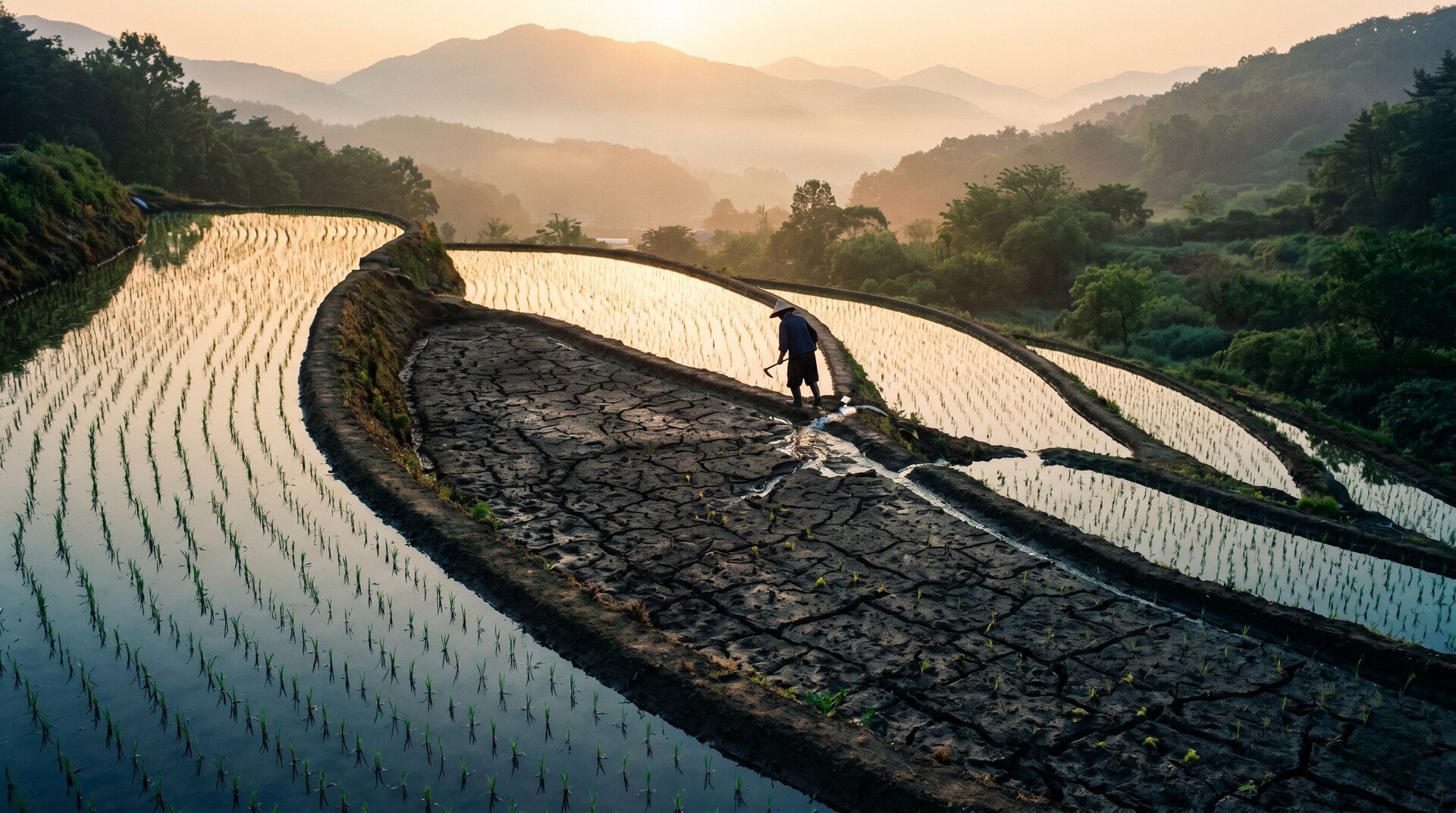
지난주 화요일, 모내기를 했다. 다섯 마지기. 맨 위 논과 맨 끝 논은 물빠짐이 적어 한 번 대면 물을 잘 머금는데, 가운데 논은 물빠짐이 좋아 자꾸 마른다. 물을 댔는데도 가운데 논의 물이 모자라 로타리를 못 칠 뻔했고, 하마터면 모를 못 심을 뻔했다. Last Tuesday, I transplanted the rice. Five majigi of paddy. The top field and the bottom field drain slowly, so once you water them they hold it well; the middle field drains quickly and keeps going dry. Even after watering, the middle field held too little for me to run the rotary tiller — the puddling pass that readies flooded soil for planting — and I nearly couldn't transplant at all.
논을 들여다보다 깨닫는다. 가장 효율적인 시스템이 무엇이냐고 물으면, 정답은 없다. 가운데 논 하나 때문에 물은 더 많이 필요해지고, 더 많이 흘려보내야 한다. 윗논과 끝논은 필요 이상으로 물을 머금는데도, 새는 가운데를 채우려면 전체에 물을 들이붓고 그 많은 물을 그냥 흘려보낼 수밖에 없다. Staring at the fields, you come to understand something. Ask what the most efficient system would be, and the answer is: there isn't one. Because of that single middle field, more water is needed and more must be let run off. The top and bottom fields hold more water than they require, yet to fill the leaking middle you must flood the whole sequence and let much of it simply flow away.
논은 물을 가둬두는 저장고가 아니다. 들고 나는 흐름이다. 그리고 그 들판이 살아 있느냐는 한 가지로 갈린다. 물이 끝논까지 닿는가. A paddy is not a reservoir for storing water. It is a current — water moving in and out. And whether the field lives or dies comes down to one thing. Does the water reach the last paddy?
이 물음을 손에 쥐고, 지금 우리 사회를 들여다보자. 내일은 선거일이다. Hold that question in your hand, and look at our society today. Tomorrow is election day.
또 하나의 물길 — 서울의 한 아버지Another Channel — A Father in Seoul
지난 2월, 서울의 마흔두 살 직장인이 여덟 살 아들의 생일에 삼성전자 주식 세 주를 선물했다. 당시 약 50만 원어치. 그는 이것을 아들이 장기적으로 부를 쌓을 가장 현실적인 방법이라 보았다. 서울 인기 지역에 집을 살 형편은 못 되고, 수도권 외곽의 값싼 집은 장기적으로 가치가 빠질 자산이라 여겼기 때문이다. 복리로 자산을 키우면서 세금도 아끼는 길이라는 것이다. This past February, a forty-two-year-old office worker in Seoul gave his eight-year-old son three shares of Samsung Electronics for his birthday — worth about 500,000 won at the time. He saw it as the most realistic way for his son to build wealth over the long run. He cannot afford a home in a desirable part of Seoul, and he judged that cheap property outside the capital would lose value over time. Compounding builds the asset, he reasoned, while saving on tax along the way.
이 아버지를 탓할 수 없다. 그의 선택은 한 가계가 내릴 수 있는 합리적 반응이다. 왜냐하면 임금으로는 더 이상 부를 쌓기 어려운 시대가 왔기 때문이다. You cannot blame this father. His choice is a rational response available to a household — because we have entered an age in which wages can no longer build wealth.
마침 같은 주에 또 다른 기사가 나왔다. 선진국 노동자의 실질임금이 줄어들기 시작했다는 소식이다. 이란 전쟁과 호르무즈 해협 봉쇄가 일으킨 에너지 충격이 방아쇠였다. 미국은 4월 물가가 연 3.8% 오르는 동안 시간당 임금은 3.6%에 그쳐, 2년 만에 처음으로 물가가 임금을 앞질렀다. 영국은 실질임금이 사실상 정체했다가 곧 마이너스로 돌아설 전망이고(2008년 이후 네 번째 하락기), 유로존은 2022년 충격을 겨우 회복하자마자 다시 후퇴했다. In the very same week, another report appeared. Real wages in developed countries have begun to shrink. The trigger was an energy shock from the Iran war and the closure of the Strait of Hormuz. In the United States, April prices rose 3.8 percent year on year while hourly earnings rose only 3.6 percent — the first time in two years that prices outran pay. In the United Kingdom, real earnings have all but stalled and are set to turn negative (the fourth such decline since 2008); in the Eurozone, workers had only just clawed back the ground lost in 2022 before falling back again.
임금이라는 물길이 마르고 있다. 그러니 사람들은 마르지 않는 물길 — 자산 — 로 옮겨 탄다. 아버지가 아들에게 집 대신 주식을 쥐여준 것은, 끝논이 마르는 것을 본 농부가 윗논으로 모를 옮기려는 것과 같다. The channel called wages is drying up. So people switch to the channel that does not dry — assets. A father handing his son stock instead of a house is the farmer who, watching the last paddy go dry, moves his seedlings to the upper field.
윗논에 고인 물 — 고스트 GDPWater Pooling in the Upper Paddy — Ghost GDP
그런데 윗논의 물은 정말 넘치고 있는가. 숫자는 그렇다고 말한다. But is the water in the upper paddy truly overflowing? The numbers say yes.
그러나 그 물은 끝논까지 닿지 않는다. 코스피의 +101%는 자산을 가진 사람을 살찌우고, 실질임금 하락은 임금으로 사는 사람을 깎는다. 물은 윗논 — 자본과 자산 보유자 — 에 고이고, 끝논 — 임금과 가계 — 은 마른다. 지수와 GDP는 "풍년"이라 말하는데 장바구니는 "흉년"이라 말하는 이 어긋남, 고인 물과 마른 논의 간격. 이것이 우리가 고스트 GDP라 불러온 것이다. 총량은 분명히 늘었는데, 그 물이 아래로 흐르지 않는 상태. Yet that water does not reach the last paddy. The KOSPI's +101 percent fattens those who hold assets, while shrinking real wages cut those who live on wages. The water pools in the upper paddy — capital, asset holders — and the last paddy — wages, households — runs dry. The index and GDP cry "bumper harvest" while the grocery basket cries "lean year." That gap between pooled water and parched field is what we have called Ghost GDP. The total has plainly risen, yet the water does not flow downward.
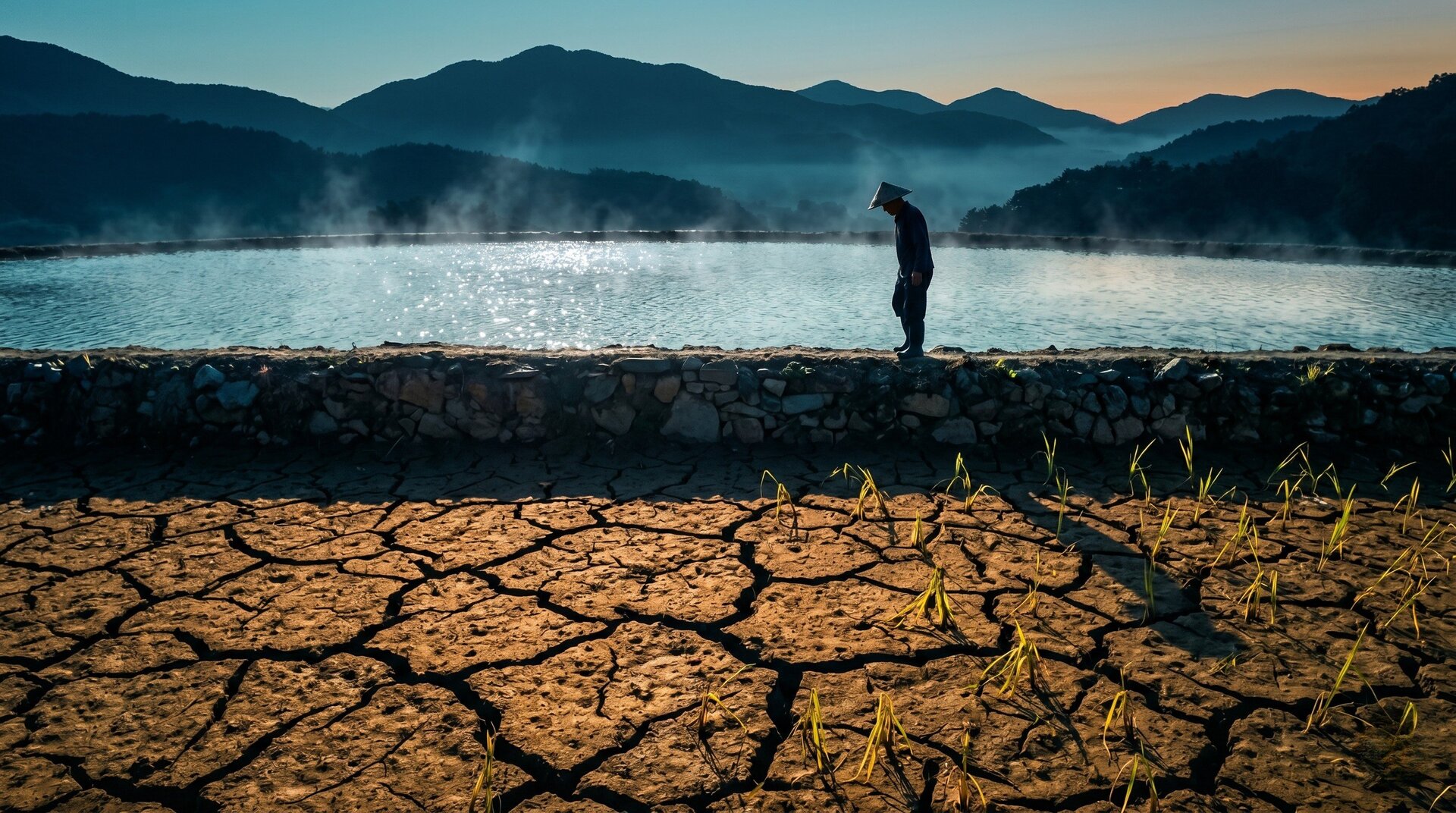
왜 흐르지 않는가. 이번 상승장의 정체를 보면 답이 보인다. 랠리 전체가 AI 데이터센터에 들어가는 HBM, 즉 삼성전자·SK하이닉스다. 인공지능 시대의 산출은 노동이 아니라 자본 — 칩과 인프라 — 으로 흘러간다. 자본집약적이어서 지수와 GDP는 끌어올리지만, 그만큼의 임금과 일자리를 만들지 않는다. 물이 윗논에서 증발할 뿐 아래로 내려가지 않는 구조다. Why doesn't it flow? Look at the nature of this rally and the answer appears. The whole of it is HBM bound for AI data centers — that is, Samsung Electronics and SK Hynix. In the age of artificial intelligence, output flows not to labor but to capital: to chips and infrastructure. Being capital-intensive, it lifts the index and GDP but does not create wages and jobs in proportion. The water evaporates from the upper paddy rather than descending.
고스트 GDP의 원형은 중국이다. 투자와 부동산이 성장을 떠받치는데 가계 소비 비중은 비정상적으로 낮다. 물은 거대한데 끝논은 늘 목마르다. 한국은 지금 그 AI 자본지출 버전의 입구에 서 있다. The archetype of Ghost GDP is China. Investment and property prop up growth while household consumption stays abnormally low. The water is vast, yet the last paddy is forever thirsty. Korea now stands at the entrance to an AI-capital-spending version of the same.
잠시 호흡을 멈추고 — 불로소득의 두 얼굴Pause and Breathe — The Two Faces of Unearned Income
여기서 정치의 언어가 끼어든다. 부동산 시세차익은 '불로소득'이고, 답은 주식이라는 것이다. 그러나 한 시민은 자연스레 되묻는다. 부동산 차익이 불로소득이라면, 주식 차익은 왜 아닌가. 게다가 주식에는 도박의 그림자까지 있지 않은가. Here the language of politics intrudes. Capital gains on property are "unearned income," it says, and the answer is stocks. But a citizen naturally asks back: if property gains are unearned income, why are stock gains not? And do stocks not carry the shadow of gambling as well?
호흡을 멈추고 양쪽을 공평히 보자. 부동산을 콕 집는 데는 근거가 있다. 경제학에서 불로소득의 원형은 '지대'다. 토지는 공급이 고정돼 있고 그 가치 상승은 소유자의 노력이 아니라 외부 — 지하철, 학군, 인구 — 가 만든다. 사회가 만든 가치를 소유자가 거둔다. 그래서 "토지 불로소득은 과세해도 공급이 줄지 않으니 정당한 세원"이라는 논리가 종부세·양도세의 뿌리다. Pause, breathe, and weigh both sides fairly. There is a basis for singling out property. In economics, the archetype of unearned income is rent. Land is fixed in supply, and its rising value is created not by the owner's effort but by external forces — a subway line, a school district, population. The owner harvests value that society created. Hence the logic, rooted in the comprehensive real estate tax and the capital-gains tax: "land rent can be taxed without reducing supply, so it is a legitimate base."
주식은 다른가. 다르다는 쪽은 핵심을 노동 유무가 아니라 '생산적 자본이냐 지대 추출이냐'에 둔다. 기업이 새로 발행하는 주식을 사면 그 돈은 공장·연구·고용으로 흐르고, 수익은 실질 위험을 떠안은 대가다. 자본은 토지와 달리 공급이 탄력적이라 무겁게 과세하면 투자와 일자리가 줄어든다. 같다는 쪽은 한 사실을 든다. 거래소 거래의 대부분은 유통시장이라 기업으로는 한 푼도 안 들어간다. 투자자끼리 손바꿈일 뿐이다. 그렇다면 토지 차익과 주식 차익을 가를 근거가 약해진다. 한국이 금융투자소득세를 거듭 미뤄 큰 주식 차익을 가볍게 다뤄 온 사실은 이 긴장을 더 도드라지게 한다. Are stocks different? Those who say yes locate the crux not in the presence or absence of labor but in whether the capital is productive or rent-extracting. Buy newly issued shares and the money flows into factories, research, and hiring; the return compensates real risk borne. And unlike land, capital is elastic in supply, so taxing it heavily shrinks investment and jobs. Those who say no raise one fact: most exchange trading is in the secondary market, where not a single won reaches the company. It is merely a transfer between investors. If so, the ground for separating land gains from stock gains grows thin. That Korea has repeatedly postponed its financial investment income tax, treating large stock gains lightly, only sharpens the tension.
자강헌은 이 자리에서 어느 손도 들지 않는다. 어느 쪽이 옳은지는 가치 판단이고, 그 판단은 내일 투표소에서 각자가 내릴 몫이다. 다만 한 가지는 진영을 가르지 않고 단단하다. "같은 도구라면 같은 잣대를 대야 하지 않는가." 이 일관성의 물음은 어느 정당을 지지하든 함께 마주해야 한다.Jagangheon raises neither hand here. Which side is right is a question of values, and that judgment belongs to each person at the ballot box tomorrow. But one thing holds firm across party lines: if the instrument is the same, the moral measure should be the same too. This question of consistency is one that all must face, whichever party they support.
동시대의 증거 — 물을 가두면 둑이 터진다The Evidence of Our Moment — Dam the Water and the Levee Breaks
추상을 내려놓고 지금의 숫자를 보자. Set the abstractions down and look at the numbers of this moment.
금융감독원은 이미 빚투 급증을 경고하고 증권사에 리스크 관리 강화를 주문했다. (출처: 서울경제 2026.3)The Financial Supervisory Service has already warned of the surge in debt-fueled investing and ordered brokerages to strengthen risk management. (Source: Seoul Economic Daily, March 2026)
투자와 투기와 도박은 칼로 자르듯 나뉘지 않는다. 하나의 스펙트럼이다. 한쪽 끝에는 기업의 성장과 현금흐름을 기대하며 오래 자본을 대는 투자가, 다른 쪽 끝에는 밑에 깔린 가치 없이 가격에만 거는 도박이 있다. 레버리지, 짧은 보유, 소수 종목 쏠림이 도박 쪽으로 기우는 표식이다. 1년에 100% 넘게 오른 지수, 사상 최대의 빚, 고점에서 신용으로 막차를 타는 개인 — 투기적 과열의 교과서적 징후다. Investing, speculation, and gambling are not cleanly divided. They form a single spectrum. At one end is investing — committing capital for the long term, expecting a firm's growth and cash flow. At the other is gambling — betting on price alone, with no underlying value beneath. Leverage, short holding periods, concentration in a few names are the markers tilting toward the gambling end. An index up more than 100 percent in a year, a record pile of debt, individuals boarding the last train on credit at the peak — these are textbook signs of speculative overheating.
여기서 다섯 마지기가 돌아온다. 농부는 가운데 논이 새는 것을 보고 "물을 더 흘려보내야 한다"고 받아들인다. 흘러나가는 물은 낭비처럼 보이지만, 그 흐름이 끝논을 먹이고 들판을 살린다. 농부의 시스템에는 여유(슬랙)가 있다. 반면 빚투의 시스템은 여유를 0으로 깎는 것을 '효율'이라 부른다. 한 방울도 흘려보내지 않으려 모든 물을 가두면, 평소엔 효율적이지만 임계점을 넘는 순간 둑이 터진다. 올라갈 때는 계단으로 가고, 내려올 때는 엘리베이터를 탄다. 37조 원이 위험한 진짜 이유는 규모가 아니라 속도이며, 그 마지막 청산은 빚을 내지 않은 사람까지 함께 쓸어간다. Here the five majigi return. The farmer, seeing the middle field leak, accepts that "more water must be let to flow." The runoff looks like waste, yet that very current feeds the last paddy and keeps the field alive. The farmer's system carries slack. The debt-fueled system, by contrast, calls the cutting of slack to zero "efficiency." Dam every drop, refusing to let any flow, and it is efficient in calm times — but the moment it crosses a threshold, the levee breaks. Markets take the stairs up and the elevator down. The real danger of 37 trillion won is not its size but its speed, and the final liquidation sweeps away even those who never borrowed at all.
물을 가두는 것이 강함이 아니다. 흘려보내며 순환시키는 것이 강함이다. Damming the water is not strength. Letting it flow, keeping it in circulation — that is strength.
무엇을 기준으로 대화할 것인가On What Basis Can We Talk?
여기까지 오면 진짜 혼란의 정체가 드러난다. 개인과 기업과 정부가 도무지 대화가 안 되는 이유는, 저마다 다른 숫자 위에 서 있기 때문이다. 정부는 GDP와 지수 위에, 기업은 마진 위에, 가계는 장바구니 위에 서 있다. 같은 식탁에 앉되 서로 다른 자를 들고, 서로 다른 경제를 가리키며 말한다. 그러니 어긋날 수밖에 없다. Come this far, and the true source of the confusion shows itself. The reason individuals, firms, and government cannot talk to one another is that each stands on a different number. Government stands on GDP and the index, firms on margins, households on the grocery basket. They sit at one table holding different rulers, each pointing at a different economy as they speak. No wonder they talk past each other.
자강헌의 답은 하나의 마스터 지표를 찾는 것이 아니다. 그 탐색 자체가 지적 교만이다. 다섯 마지기에 "정답은 없다"였듯이. 대신 두 가지다. 첫째, 각 주체가 자신이 어느 숫자 위에 서 있는지를 먼저 정직하게 밝히는 것. 그래야 대화가 시작된다. 둘째, 축을 바꾸는 것 — 얼마나 쌓였나(축적)에서 얼마나 순환하나(흐름)로. 들판의 건강은 윗논에 고인 물의 양이 아니라 물이 끝논에 닿느냐로 갈린다. Jagangheon's answer is not to hunt for a single master metric. That hunt is itself a form of intellectual pride — just as the five majigi had no right answer. Instead, two things. First, each party must honestly state which number it stands on before anything else. Only then can a conversation begin. Second, shift the axis — from how much is stored (accumulation) to how much circulates (flow). A field's health is decided not by the volume pooled in the upper paddy but by whether the water reaches the last one.
혼란이 깊은 데는 두 겹의 이유가 더 있다. 일자리 불안은 결국 "AI가 내 자리에 ATM인가, iPhone인가" — 한 가지 일을 자동화해 밀어내는가, 새 능력과 시장을 여는가 — 의 물음이고, 정책의 혼선은 정부가 백스톱(가계 보호)과 액셀러레이터(성장 가속)를 동시에 하려다 어느 쪽도 일관되게 못 하는 데서 온다. 자산 부양은 액셀러레이터, 임시 감세는 미약한 백스톱. 한 정부 안에서 두 발이 엇갈리니 시민이 헷갈리는 게 당연하다. There are two further layers to the confusion. The anxiety over jobs comes down to asking whether AI is, for your place, an ATM or an iPhone — does it automate one task and push you out, or open new capacities and markets? And the incoherence of policy comes from a government trying to be backstop (protecting households) and accelerator (speeding growth) at once, and so doing neither consistently. Asset-pumping is the accelerator; a temporary tax cut is the feeble backstop. When two feet cross within one government, of course the citizen is confused.
무엇을 물려줄 것인가What Do We Pass On?
그래서 무엇을 할 것인가. 자강헌은 처방을 팔지 않는다. 다만 멈춤 끝에 두 가지를 나눈다. So what is to be done? Jagangheon does not sell prescriptions. It offers only two things found at the end of the pause.
실용적 지식. 부동산과 주식을 가르는 과세 논리에는 일관된 부분과 일관되지 않은 부분이 함께 있다. 지수와 GDP의 풍년과 실질임금의 흉년은 동시에 진실이다. 물은 늘었으나 끝논까지 닿지 않는다 — 고스트 GDP. 이 둘을 함께 직시하는 것이 정직한 출발이다. Practical knowledge. The logic dividing property from stocks contains parts that are consistent and parts that are not. The bumper harvest of the index and GDP and the lean year of real wages are true at the same time. The water has risen, yet it does not reach the last paddy — Ghost GDP. To face both at once is the honest starting point.
실천적 지혜. 다섯 마지기의 농부와 서울의 아버지, 두 물길이 여기서 만난다. 들판을 강하게 만드는 길은 각 논을 밀봉해 제 물을 가두는 것(각자도생, 혹은 빚내어 자산 랠리를 좇는 것)이 아니다. 흐름을 받아들이고, 어떤 계절이 와도 자라날 능력을 기르는 것이다. 올해의 물, 올해의 비, 올해의 흙은 작년과 다르다 — 一期一會. 미리 계산해 둘 수 없고, 눈앞의 논을 읽어 그때그때 대응할 뿐이다. Practical wisdom. Here the farmer of the five majigi and the father in Seoul, the two channels, meet. The way to make a field strong is not to seal each plot and hoard its own water — each man for himself, or chasing the asset rally on borrowed money. It is to accept the flow, and to cultivate the capacity to grow in whatever season comes. This year's water, this year's rain, this year's soil differ from last year's — ichi-go ichi-e, one time, one meeting. They cannot be computed in advance; you read the field before you and respond as it comes.
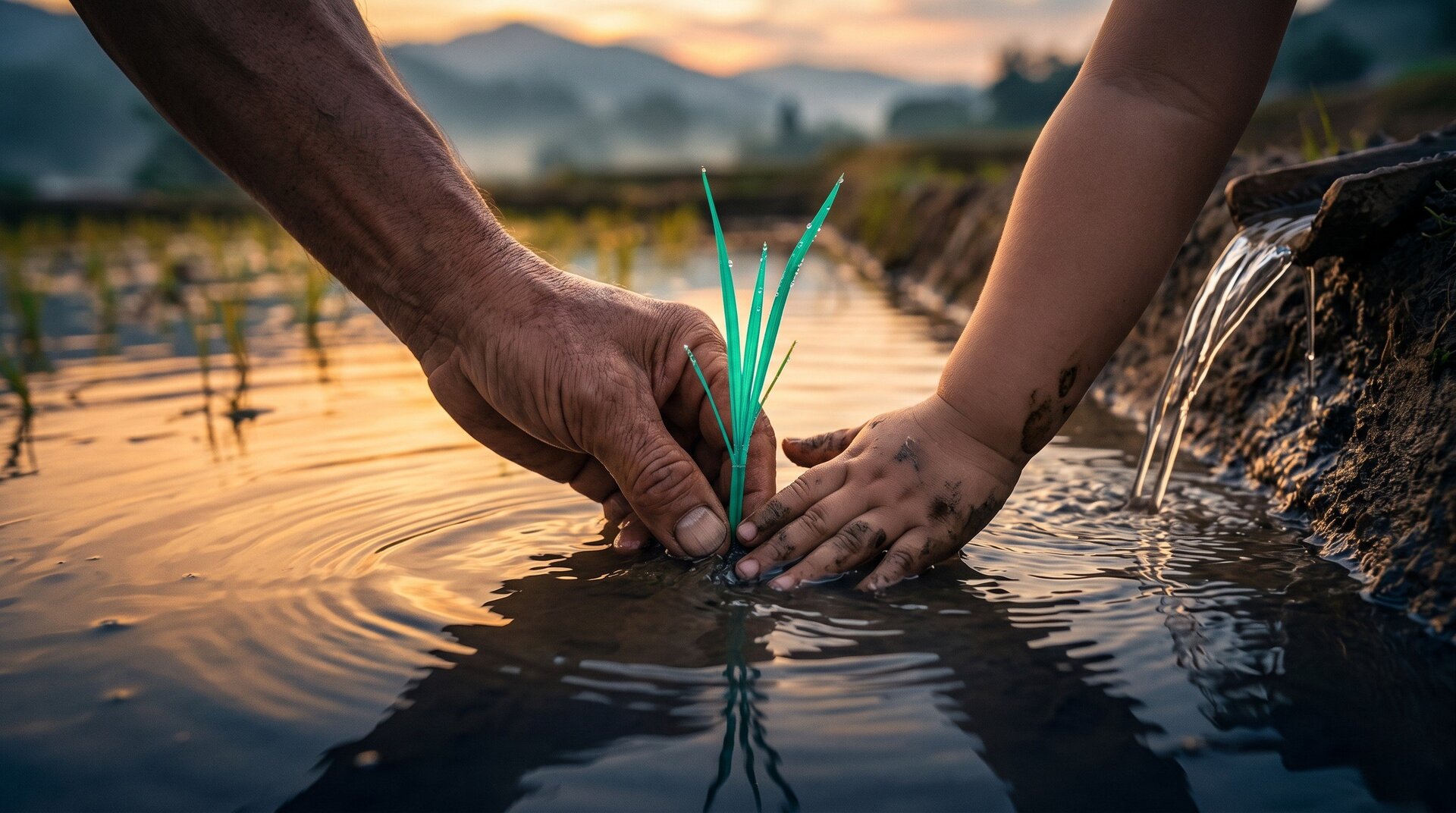
그러므로 다음 세대에게 물려줄 것은 자산이 아니라 스스로 강해질 힘이다. 주식을 건네는 데 그치면 또 하나의 증여지만, 함께 읽는 법을 가르치면 自强이 된다. 누구나 스스로 강해지도록 돕는 것 — 그것이 자강헌이다. And so what we pass to the next generation is not an asset but the power to grow strong on their own. Hand over stock and stop there, and it is one more endowment; teach them to read it together, and it becomes self-strengthening — jagang. To help anyone become strong by their own standing — that is Jagangheon.
내일 무엇을 찍든, 그 전에 잠시 호흡을 멈추자. 부동산이 불로소득이냐 주식이 불로소득이냐의 다툼보다, 여당이냐 야당이냐의 다툼보다 먼저 물어야 할 것이 있다. 우리의 들판에서, 물은 끝논까지 닿고 있는가. 씨앗은 거기서 자란다. Whatever you vote for tomorrow, pause and breathe first. Before the quarrel over whether property or stocks are unearned income, before the quarrel over ruling party or opposition, there is a prior question. In our field, is the water reaching the last paddy? That is where the seed grows.